
Why did you want to study for a degree apprenticeship?
I enjoyed school and I’ve always been very curious, but as I got further into GCSE’s and college, the teaching style changed and shifted towards exam preparation. I stopped enjoying it as much and found exams and assessments increasingly challenging. I realised that full-time education didn’t suit me. My apprenticeship has made university education accessible for me, reducing study time to a day a week and the rest of the time spent gaining practical experience. As a neurodiverse student, this type of learning has been so much better for me.
How can people at your stage in your career benefit from a degree apprenticeship?
The practical experience I’ve gained has been crucial in furthering my career. A degree is usually the minimum requirement on job applications, so the opportunity to gain practical skills whilst working within your chosen industry is invaluable. Understanding of working practices and technical applications will set you apart as you progress in your career. The apprenticeship route may be longer, but I believe it is the best method for career growth. The knowledge, skills and behaviours I’ve gained are industry recognised and accredited, demonstrating my competence in the scientific sector. The freedom to earn and learn has been essential for my development as an independent adult.
How has Bristol Myers Squibb supported you through your apprenticeship?
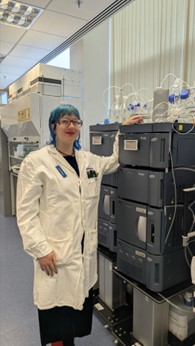
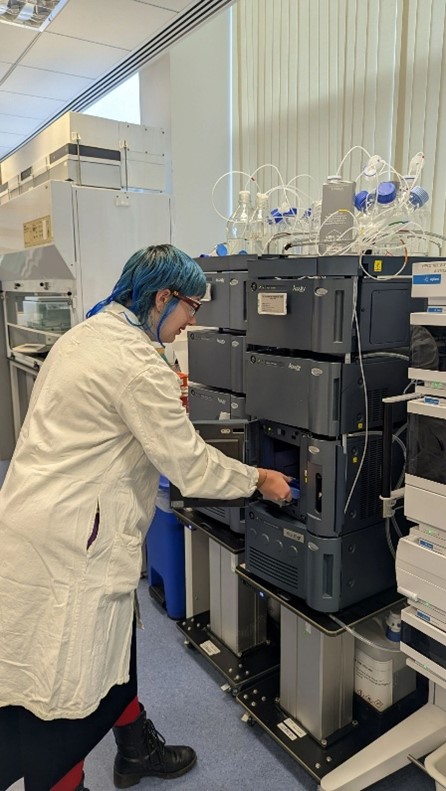
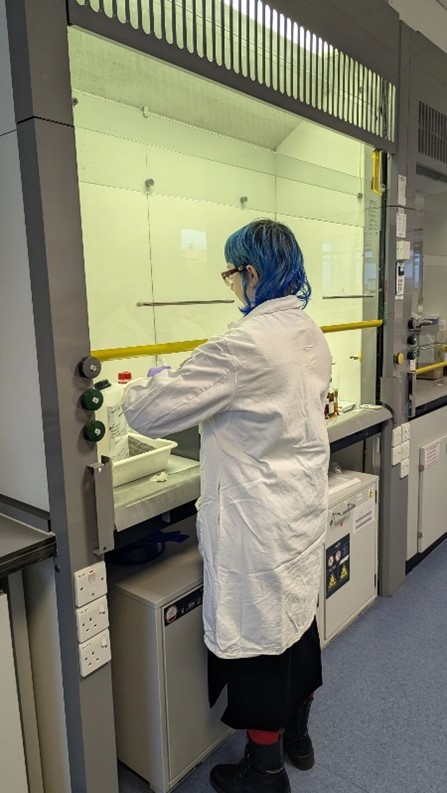
As a host employer, Bristol Myers Squibb has been fantastic in accommodating my adjustments and being open to hearing my perspective. My manager has a great approach to early-career colleagues and helped me maintain my focus and drive during my workplace synoptic project. Through hands-on experience, I have continuously learned new skills, developing proficiency in key laboratory techniques and data analysis methods that are directly applicable to the pharmaceutical industry. These skills have not only enhanced my scientific understanding and ability but also prepared me to contribute effectively as a member of a team to practical / applied development projects in fast-paced environment. In addition, I have particularly enjoyed my participation in STEM events with a focus on disability and neurodiversity inclusion.
What support has Cogent Skills given you?
Cogent has been fundamental in securing me great host employers and has been really supportive throughout. My managers have been open and honest in their interactions with me, and I have always felt able to reach out when needed. When I have implemented Access to Work provisions, they facilitated them and ensured my comfort and requirements in using them. The Aspire Award scheme has allowed many colleagues to share positive feedback about my performance over the years, and for me to be rewarded in a tangible way.
What’s next in your career journey?
I am transitioning from a laboratory-based role to pursue a career in environmental science. My apprenticeship at Bristol Myers Squibb has provided me with a strong foundation of technical expertise and a diverse set of transferable skills that are essential for this next step. Through hands-on experience, I mastered analytical techniques, interpreted complex data, and worked within industry regulations—skills directly applicable to environmental science. Equally important, the programme fostered my adaptability, problem-solving, communication, and teamwork abilities, enabling me to collaborate effectively and contribute to multidisciplinary projects. The comprehensive training and professional development I received at Bristol Myers Squibb have given me the confidence and capability to take on new challenges. I am excited to leverage these skills and experiences as I move forward, knowing that my time at Bristol Myers Squibb has fully prepared me to make a meaningful impact in my future career.